
Study Days
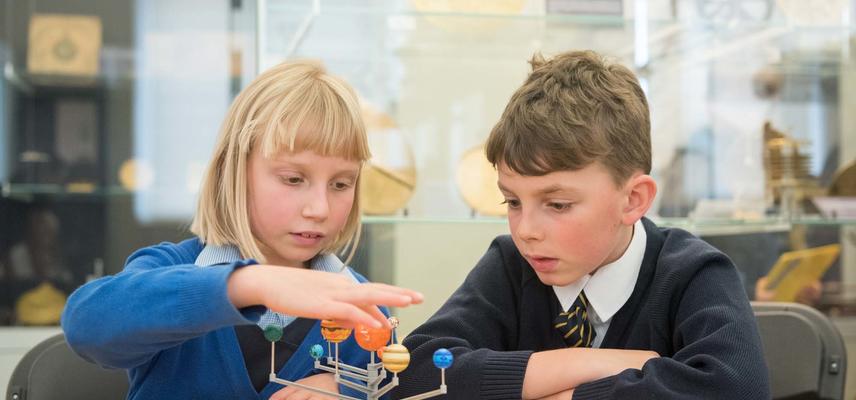
Study Days are designed to stimulate students’ interest in a special topic relevant to their studies while offering them insight into university life. The Museum organises study days for Key Stages 3, 4 and 5 in conjunction with other museums and academic departments of the University. See below for dates.
A typical Study Day for Key Stage 5 (Sixth Form) will include a series of lectures given by university academic staff followed by an optional practical workshop in the afternoon based in one of the University’s departments.
Study Days aimed at Key Stages 3 and 4 are based on a programme of rotating workshops which may be spread over more than one museum or department.
Programme of Study Days for the academic year 2011-12
The following dates are scheduled for study days over the next academic year subject to the availability of university facilities. Please contact the education officer for further details.
Autumn 2011
Thursday 8th December 2011
Scientific and Medical Imaging (AS/A2 Physics)
A morning of talks on imaging techniques by university lecturers followed by a workshop session in the afternoon.
Spring 2012
Thursday 11th February 2012
Small Worlds (Years 9/10)
A day’s programme of workshops at the Museum of the History of Science, University Museum of Natural History and the Botanic Garden on adaptation and the environment, the ethics of collecting, and the early history of microscopy.
Wednesday 21st March 2012
Astrophysics (AS/A2 Study Day with Physics Department)
Summer 2012
Wednesday 20th – Friday 22nd June 2012
Astronomy Study Day (Key Stage 3/4)
A day of rotating woshop sessions in conjunction with the Oxford University Physics Department on aspects of the history of astronomy and modern astrophysics.
Previous Study Days
|
ASTROPHYSICS (KS5) A study day exploring ideas about the Universe from a brief history of cosmology to current knowledge about the origins of the Universe. |
![]() Astrophysics
|
|
IMAGING (KS5) A study day about the use of imaging techniques in a range of scientific practices. |
![]() Another microscopy image
|
|
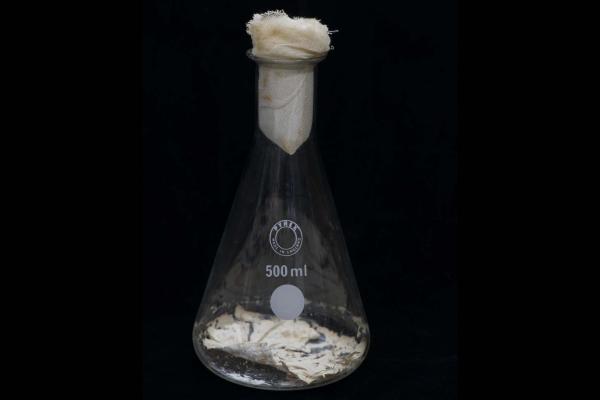
PENICILLIN (KS5) During the Second World War, Oxford researchers Florey and Chain developed methods of extracting penicillin and carried out the first successful treatment of a human being. Along with Alexander Fleming, they were awarded a Nobel Prize in 1945. A series of lectures traces the history of the discovery and development of production methods of penicillin, modern methods of synthesizing antibiotics, and the use of antibiotics in medical treatment. Workshops take place in the afternoon. |
![]() Penicillin culture vessels |
|
UNDERSTANDING EINSTEIN (KS5) To celebrate the centenary anniversary of the theory of Special Relativity, this study day explores various aspects of Einstein’s life and work. A series of lectures in the morning including a basic introduction to Einstein’s theory of relativity, the great quantum debate, the development of laser technology and an assessment of the impact of his work on modern astronomy. |
![]() Einstein's blackboard |